

Why Do the Oil Drops Float And Move in a Liquid Oil Drop Ornament?
The mesmerizing motion of oil drops in a Liquid Oil Drop Ornament has fascinated collectors and hobbyists for decades. The floating and drifting patterns are not only visually captivating but also illustrate fundamental physical principles. At our factory, we specialize in designing Liquid Oil Drop Ornaments that consistently deliver smooth, long-lasting motion. Dongguan Yijiaxin Gift Manufacturing Co., Ltd. has refined the balance of liquids, densities, and heating elements to ensure that each ornament performs reliably. Our engineers focus on achieving stable buoyancy, controlled movement, and optimal drop formation for every product we manufacture.
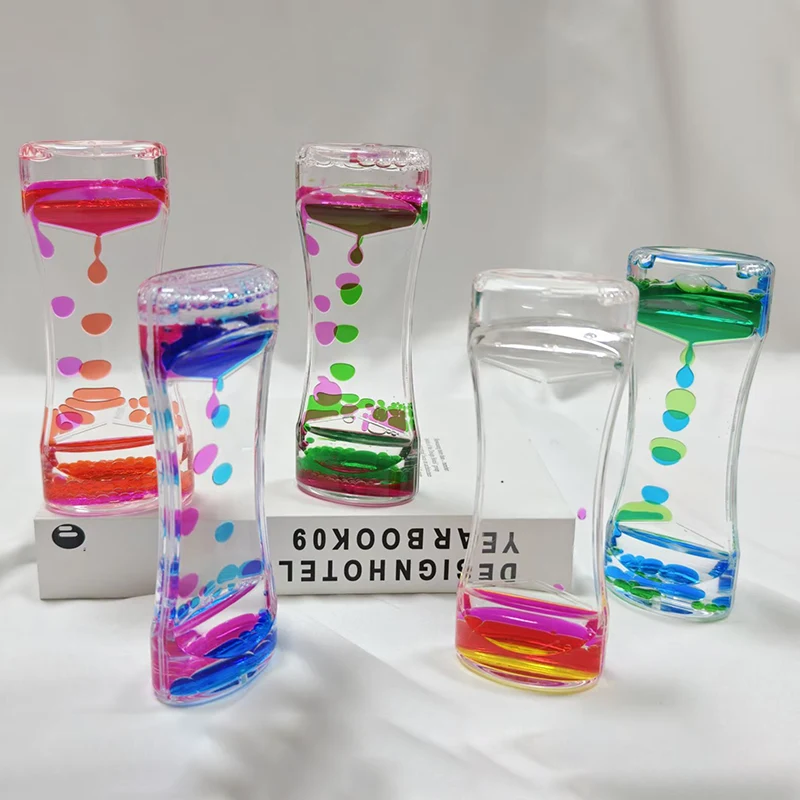
How Does Liquid Density Affect the Movement of Oil Drops?
The primary factor influencing the behavior of oil drops is the difference in density between the oil and the surrounding liquid. In our design process, we carefully select oils and clear liquids with precise density differences to achieve the desired floating effect. A slight imbalance in density can cause the drops to rise too quickly or sink too slowly, disrupting the aesthetic motion. Our factory tests multiple liquid combinations to ensure that each Liquid Oil Drop Ornament maintains smooth, rhythmic movement across a wide range of temperatures.
Density differences also determine drop stability. When the oil is too dense relative to the surrounding liquid, drops may clump or merge. Conversely, if the oil is too light, it may fail to generate the characteristic slow ascent that is key to the visual appeal. Our engineers use controlled measurements to maintain a balance, providing consistent motion and preventing irregular behavior in every Liquid Oil Drop Ornament.
What Role Does Temperature Play in Oil Drop Dynamics?
Temperature is a critical variable that affects the viscosity and buoyancy of the oil. As the liquid in the ornament heats, the oil becomes less viscous and rises more freely, creating dynamic patterns that vary with temperature changes. In our factory, we integrate reliable heating elements and design the liquid volume to respond predictably. This ensures that each Liquid Oil Drop Ornament performs optimally whether it is used in ambient indoor conditions or under direct lighting.
Maintaining a uniform temperature also reduces the risk of oil drop deformation or sticking. Dongguan Yijiaxin Gift Manufacturing Co., Ltd. incorporates precise calibration of heating components to stabilize motion. Our quality control team monitors the rise and fall of drops to ensure that each ornament meets visual and performance expectations, providing a high-quality experience for end users.
How Do Liquid Viscosity and Oil Properties Affect Motion?
The viscosity of both the oil and surrounding liquid dictates the speed and smoothness of drop movement. In our development of Liquid Oil Drop Consumables, we carefully select oils with optimal flow characteristics and minimal surface tension. Oils that are too viscous rise slowly and may form irregular shapes, while oils that are too thin can accelerate unexpectedly, disrupting the desired rhythm. Our team tests multiple formulas to create ornaments that maintain fluidity and elegance.
Other oil properties, such as chemical composition and color stability, also influence performance. Dongguan Yijiaxin Gift Manufacturing Co., Ltd. ensures that oils do not degrade over time or react with the surrounding liquid. This guarantees the longevity of motion patterns and maintains the aesthetic appeal of each Liquid Oil Drop Ornament, even after prolonged use.
How Does Container Shape Influence Oil Drop Behavior?
The design of the container itself plays a significant role in the motion of oil drops. Our engineers consider the width, height, and curvature of each Liquid Oil Drop Ornament to optimize fluid flow and drop interactions. Narrow or irregularly shaped containers can cause drops to collide with walls and each other, while appropriately shaped vessels allow consistent upward and downward motion. In our factory, we simulate drop dynamics in various container shapes to determine the most visually pleasing and reliable designs.
The combination of liquid volume, container dimensions, and heating placement ensures that each drop achieves a natural oscillating pattern. Our design philosophy balances science and aesthetics, producing ornaments that captivate viewers without sacrificing mechanical stability.
What Parameters Define the Quality of Liquid Oil Drop Ornaments?
Several product parameters determine the performance of a Liquid Oil Drop Ornament. These include oil density, liquid density, viscosity, heating wattage, and container volume. By carefully controlling these variables, our team creates ornaments that deliver predictable motion and visual appeal. We measure each parameter and document the specifications to maintain consistent quality in every batch.
The following table highlights typical parameters used in our products:
| Parameter | Recommended Range | Effect on Motion | Notes |
| Oil Density | 0.85–0.95 g/cm3 | Determines floatation speed | Balanced for smooth ascent |
| Liquid Density | 1.00–1.05 g/cm3 | Creates upward force on drops | Higher difference increases movement |
| Oil Viscosity | 50–200 cP | Controls rise and fall speed | Too high slows drops excessively |
| Heating Wattage | 15–25 W | Generates convection currents | Ensures continuous motion |
| Container Height | 15–30 cm | Provides vertical path for drops | Optimized for visual rhythm |
How Are Color and Visual Appeal Managed in Liquid Oil Drop Ornaments?
Color selection and clarity are important for both aesthetics and performance. In our factory, we use oils and liquids that remain transparent and stable under heat. Any discoloration or clouding can disrupt the visual effect and reduce the perception of motion. Dongguan Yijiaxin Gift Manufacturing Co., Ltd. implements strict quality checks on coloration and clarity for each Liquid Oil Drop Ornament to ensure consistent visual appeal for collectors and end users.
We also evaluate how different colored oils interact with lighting conditions to enhance the floating and drifting effects. Our designers and engineers collaborate closely to maintain both functional motion and eye-catching aesthetics in every product.
FAQ: Why Do the Oil Drops Float And Move in a Liquid Oil Drop Ornament?
Q1: What physical principle allows oil drops to rise and fall in the ornament?
The motion is primarily driven by density differences between the oil and surrounding liquid, combined with temperature-induced convection. Oil rises when it is less dense than the surrounding liquid and falls as the convection current cycles, creating continuous movement in the ornament.
Q2: How do heating elements affect the dynamics of the drops?
Heating elements create temperature gradients in the liquid, slightly altering viscosity and generating convection currents. These currents move the oil drops upward and downward, maintaining a steady rhythm. Proper wattage and placement are critical to achieving smooth, predictable motion.
Q3: Why is the choice of oil viscosity important?
Viscosity influences how fast drops move and how well they retain their shape. High-viscosity oils rise slowly and maintain rounded shapes, while low-viscosity oils move more quickly but may form irregular shapes. Selecting the right viscosity ensures aesthetic and reliable movement over time.
Conclusion
The movement of oil drops in a Liquid Oil Drop Ornament is the result of a careful balance between density, viscosity, temperature, container design, and heating control. Our team at Dongguan Yijiaxin Gift Manufacturing Co., Ltd. continuously refines these variables to produce ornaments with smooth, captivating motion and lasting visual appeal. If you are seeking high-quality Liquid Oil Drop Ornaments or want to explore custom designs, contact our technical team today to discuss your requirements and bring dynamic elegance to your space.